The Geography

Geography (from Greek: γεωγραφία, geographia, literally “earth description”) is a field of science devoted to the study of the lands, features, inhabitants, and phenomena of the Earth and planets. The first person to use the word γεωγραφία was Eratosthenes (276–194 BC). Geography is an all-encompassing discipline that seeks an understanding of Earth and its human and natural complexities—not merely where objects are, but also how they have changed and come to be.

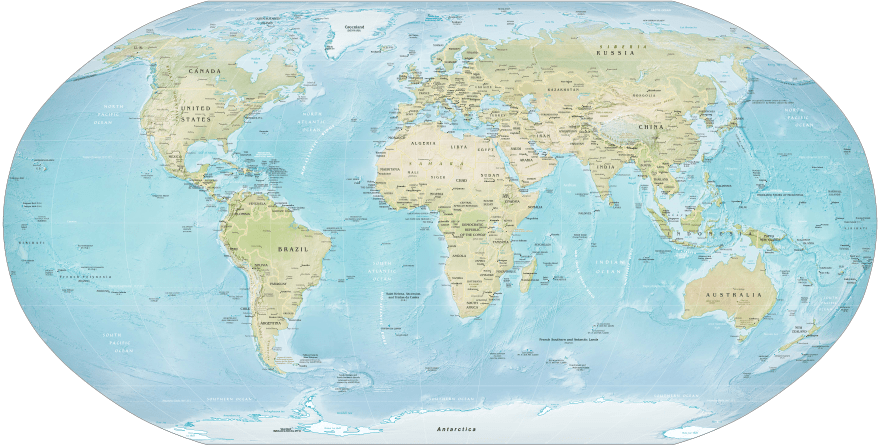
Political Map of World
Physical Map of World

Geography is often defined in terms of two branches: human geography and physical geography. Human geography is concerned with the study of people and their communities, cultures, economies, and interactions with the environment by studying their relations with and across space and place. Physical geography is concerned with the study of processes and patterns in the natural environment like the atmospherehydrospherebiosphere, and geosphere.

The four historical traditions in geographical research are spatial analyses of natural and the human phenomena, area studies of places and regions, studies of human-land relationships, and the Earth sciences. Geography has been called “the world discipline” and “the bridge between the human and the physical sciences“.

The Arts

The arts are a very wide range of human practices of creative expressionstorytelling and cultural participation. They encompass multiple diverse and plural modes of thinking, doing and being, in an extremely broad range of media. Both highly dynamic and a characteristically constant feature of human life, they have developed into innovative, stylized and sometimes intricate forms. This is often achieved through sustained and deliberate study, training and/or theorizing within a particular tradition, across generations and even between civilizations. The arts are a vehicle through which human beings cultivate distinct social, cultural and individual identities, while transmitting values, impressions, judgments, ideas, visions, spiritual meanings, patterns of life and experiences across time and space.

Prominent examples of the arts include architecturevisual arts (including ceramicsdrawingfilmmakingpaintingphotography, and sculpting), literary arts (including fictiondramapoetry, and prose), performing arts (including dancemusic, and theatre), textiles and fashionfolk art and handicraft, oral storytellingconceptual and installation artphilosophycriticism, and culinary arts (including cookingchocolate making and winemaking). They can employ skill and imagination to produce objectsperformances, convey insights and experiences, and construct new environments and spaces.

The arts can refer to common, popular or everyday practices as well as more sophisticated and systematic, or institutionalized ones. They can be discrete and self-contained, or combine and interweave with other art forms, such as the combination of artwork with the written word in comics. They can also develop or contribute to some particular aspect of a more complex art form, as in cinematography.

By definition, the arts themselves are open to being continually re-defined. The practice of modern art, for example, is a testament to the shifting boundaries, improvisation and experimentation, reflexive nature, and self-criticism or questioning that art and its conditions of production, reception, and possibility can undergo.

As both a means of developing capacities of attention and sensitivity, and as ends in themselves, the arts can simultaneously be a form of response to the world, and a way that our responses, and what we deem worthwhile goals or pursuits, are transformed. From prehistoric cave paintings, to ancient and contemporary forms of ritual, to modern-day films, art has served to register, embody and preserve our ever shifting relationships to each other and to the world.

Wikipedia

Wikipedia is a free content, multilingual online encyclopedia written and maintained by a community of volunteer contributors through a model of open collaboration, using a wiki-based editing system. Wikipedia is the largest and most-read reference work in history, and is consistently one of the 15 most popular websites as ranked by Alexa; as of 2021, it was ranked as the 13th most popular site. The project carries no advertisements and is hosted by the Wikimedia Foundation, an American non-profit organization funded mainly through small donations.

Wikipedia was launched on January 15, 2001, by Jimmy Wales and Larry Sanger; Sanger coined its name as a blending of “wiki” and “encyclopedia”. Initially available only in English, versions in other languages were quickly developed. Combined, Wikipedia’s editions comprise more than 56 million articles, that attract an average of around 2 billion unique device visits and receive more than 17 million edits per month, or develop at a rate of 1.9 edits per second.

Wikipedia has received praise for its enablement of the democratization of knowledge, extent of coverage, unique structure, culture, and reduced amount of commercial bias, but criticism for exhibiting systemic bias, particularly gender bias against women. Its reliability was frequently criticized in the 2000s, but has improved over time and has been generally praised in the late 2010s and 2020s. Its coverage of controversial topics such as American politics and major events such as the COVID-19 pandemic has received substantial media attention. At various points, Wikipedia has been censored by world governments, ranging from the blocking of specific pages to bans on the entire site. Wikipedia has become an element of popular culture, with references in booksfilms and academic studies. In 2018, Facebook and YouTube announced that they would help users detect fake news by suggesting fact-checking links to related Wikipedia articles.